Tuesday, October 18, 2022

Alternate Titles for Literary Masterworks

Boy, authors sure do like to come up with fancy titles. The Way of All Flesh? A Dance to the Music of Time? A Remembrance of Things Past?  I guess we can blame Shakespeare, Milton & the Bible for these, but still …

I translated some of these into something a little more vernacular. See if you can guess the original:

1. A Century Alone
2. Abbatoir #5
3. Almost Heaven
4. Angry Raisins
5. The Big Red A
6. The Bloody Headband
7. Blown Away
8. Buncha Idiots
9. Bye Bye Guns
10. Car-Bound

11. Conflict and the Lack Thereof
12. Dads and Grads
13. Entropy
14. Festival of Narcissism
15. Fly Lord
16. Fun House
17. Goodbye Heaven
18. Huge Plans
19. I Got Ya!
20. It's for You!

21. Kickin' the Bucket
22. The Lone Hunting Heart
23. Memories of Yesteryear
24. Nature Calls
25. Endless Jokes
26. Noise and Anger
27. Petite Chicks
28. Royal Guys
29. Sunrise Too
30. You Do the Crime, You Do the Time

Scroll down for the answers.


1. A Century Alone


2. Abbatoir #5


3. Almost Heaven


4. Angry Raisins


5. The Big Red A


6. The Bloody Headband


7. Blown Away


8. Buncha Idiots


9. Bye Bye Guns


10. Car-Bound


11. Conflict and the Lack Thereof


12. Dads and Grads


13. Entropy


14. A Festival of Narcissism


15. Fly Lord


16. Fun House


17. Goodbye Heaven


18. Huge Plans


19. I Got Ya!


20. It's for You!


21. Kickin' the Bucket


22. The Lone Hunting Heart


23. Memories of Yesteryear


24. Nature Calls


25. Endless Jokes


26. Noise and Anger


27. Petite Chicks


28. Royal Guys


29. Sunrise Too


30. You Do the Crime, You Do the Time


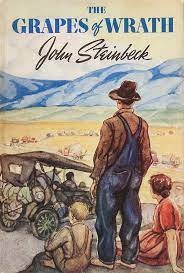
And, yes, as a former English teacher, I’ve read all but a handful of these.  Just for fun, I’ve included the cover for the book I originally read where I could.  Yup, I have a photographic memory too.

Monday, October 3, 2022

When Capitals Are Not the Biggest Cities in a State

I don’t know why, but I’m kind of fascinated with state capitals. In a previous post, I looked at how central (or not) they may be. You know, Indianapolis versus, say, Juneau. 

Another question possibly related to location is the size of the capital, especially relative to other cities in that state. Think about it. The state fathers might, for example, have platted a capital right in the middle of the state, only to find out later that there were more propitious locations along a river or lake, or at the confluence of trails, roads or railroads. Later, the capital may have only had government to sustain it, while the other cities simply grew and grew. 

Similarly, there are probably some capitals out there that simply reflect original settlement – along the coast, heading east to west, etc. Once again, they may have been outstripped by someplace else more favored elsewhere.

Now, there are plenty of cases where the largest city is, indeed the capital – Boston, Richmond, Phoenix, Atlanta, Indianapolis, Oklahoma City, Honolulu …  Interestingly, though, there are more where that is not the case.  Overall, it’s about a 60/40 split.  

Cases in point include the nation’s four largest cities – NYC, LA, Chicago, Houston … In fact, of the 10  largest cities in the US, only Phoenix and Austin serve as state capitals.

60% of 50 is a lot, though, so what I think I’ll do is just show you the state capitals that are less than 10% the size of the biggest cities in that state. I’ll be ranking them in decreasing order of comparability. I’ll be listing the percentage, the state & then the capital / biggest city.

Shall we?


9% - Nevada (Carson City / Las Vegas)

Founded in 1858, Carson City was named after the famous Kit Carson, an early scout of the area. It boomed after discovery of the Comstock Lode, becoming the territorial capital in 1861 and the state capital in 1864. 

Though it nabbed a US mint in 1870, Carson City was left a little high and dry when the Comstock Lode ran out. In fact, it took until 1960 to equal its 1880 population. That said, it is one of the biggest capital cities in physical size, at 146 square miles.

Everybody knows Vegas, but you might not realize how recent its growth is. Founded as recently as 1911, it only started to grow with legalized gambling in 1931, and only really took off in the 1950s and ‘60s.

The trees have grown up, but that’s the only change


9% - Kentucky (Frankfort / Louisville)

Frankfort lies between Kentucky’s two largest cities, Lexington and Louisville. That, however, had nothing to do with its being selected the capital. Instead, it won over the selection committee by offering a “log house as capitol for seven years, a number of town lots, $50 worth of locks and hinges, 10 boxes of glass, 1,500 pounds of nails, and $3,000 in gold” (Wikipedia). 

It’s location on the Kentucky River also helped. Indeed, the settlement was originally called Frank’s Ford, after Jewish pioneer Stephen Frank. It was founded in 1786 and became the state capital in 1792.

Lexington, Louisville and Frankfort were all in the running again in the 1890s when the state legislature seriously considered a move. After 100 years in the same place, though, they decided to simply stay put.

Looks a lot like that one in DC, don’t it?


7% - South Dakota (Pierre / Sioux Falls)

Pierre (pronounced “peer”) is the second least-populous state capital, with only 14,000 people. (Montpelier, VT is first, with only 8,000.) It was originally an Indian trading station, dubbed Fort Pierre, and named after Pierre Chouteau Jr., a prominent fur trader. 

Founded in 1880, the town of Pierre was chosen as the capital upon statehood in 1889. Its central location and siting on the Missouri River were its main attractions.  Its main rival was Huron, which still has more people to this day.  

Today, though still smack dab in the middle of the state, Pierre is not that easy to get to. It is one of a just a few state capitals that are not served by the interstate highway system.

Sioux Falls never shared Pierre’s central location, being instead near the borders of Minnesota & Iowa. Older than Pierre (having been founded in 1876), it only really started growing in the 20th Century.

Rather unique capitol for its sylvan location & black dome 


7% - Washington (Olympia / Seattle)

Settled in the 1840s, Olympia was an early crossroads for water-borne trade. It was named after the Olympic Mountains, northwest of the city. Olympia became the territorial capital in 1853 when Washington separated from Oregon. 

Unfortunately, the railroad, when it finally came through, decided to place its terminus in Tacoma. Nonetheless, the capital stayed in Olympia, becoming the state capital in 1889. In the meantime, the northern parts of Puget Sound, including Seattle as well, just grew and grew.

Seattle has a long history of being a boom town, starting with timber; then as a jumping off point for the gold rush; and finally for shipbuilding, aircraft (Boeing), and tech (Microsoft, Amazon). 

A bit top-heavy, no?


7% - Maryland (Annapolis / Baltimore)

Settled in 1649, Annapolis was named, consecutively, Proctor’s Town, Town at the Severn, Anne Arundel’s Town (after wife of first Proprietor of Maryland), and – finally – Annapolis (after the Queen).  It became the capital in 1694, taking over from St Mary’s City (which was eventually abandoned). 

Annapolis also once served as the nation’s capital, during the years 1783 and 1784. It’s probably best known as the home of the Naval Academy. I was very lucky to live nearby as a kid while my cousin attended. Got to know the Academy and Annapolis very well.

Baltimore dates back to only 1706. Founded as a tobacco port, it took off big time after the B&O railroad, one of the first railroads in the US, made it its terminus in 1830.

Wow, does that shot bring back some memories


4% - Illinois (Springfield / Chicago)

Springfield is the 6th largest city in Illinois, and the largest outside of Chicagoland. It was founded in the 1810s, and originally called Calhoun. That particular SC secessionist & fire eater became rather unpopular in the North, however, so the townsfolk renamed the town in 1832.

Springfield became the state capital in 1839, following in the footsteps of Kaskaskia & Vandalia. Its much more central location, along with some politicking from resident Abraham Lincoln helped seal the deal. Indeed, Lincoln called Springfield home for almost 25 years, from 1837 to 1861.

Chicago was founded in 1833, at an important portage between the Great Lakes & the watershed of the Mississippi River. The Erie Canal and railroads cemented its status as the hub of the Midwest and the 3rd largest city in the country.

Chez Abe


3% - Pennsylvania (Harrisburg / Philadelphia)

The area that would become Harrisburg was first settled in 1719, by one John Harris, Sr. His son, John Harris, Jr. subsequently led the drive to have the settlement incorporated, in 1791. 

Harrisburg became the capital in 1821, as Pennsylvania looked for a more central location than that of the previous two capitals, Philadelphia and Lancaster. Indeed, Harrisburg’s on a great site – smack dab in the middle of the state, on the Susquehanna River, and at the crossroads of several Indian trails.

Harrisburg may be most famous for the Hersheypark amusement park, as well as infamous for Three Mile Island. Philadelphia’s famous for all sorts of things.

Highlight of my middle school field trip. What could be more fun for a teenage boy?


1% - New York (Albany / New York City)

Albany was settled in 1614, chartered in 1698, and made the capital in 1797 (when NY became a state and the US became a country). Previous capitals included Kingston, Hurley, Poughkeepsie, and New York City.

Originally called Beverwijck (“beaver district”) by the Dutch, it was re-named for the Duke of Albany (later King James II). It’s the oldest continuously chartered city in the country and the 2nd oldest American city that is also a capital (behind Santa Fe).

Albany seems to have a perfect location. It’s at the northern limit of navigation on the Hudson, is where the Mohawk and Hudson meet, was the original terminus of the Erie Canal & was the crossroads of numerous paths, roads & railroads. Nonetheless, it has always been outshone by its neighbor to the south.

It looks like a hotel, but it’s actually the capitol


Thursday, September 15, 2022

Unlikely Preppies

I was out biking the other day and rode through the town of Groton, MA (my wife and I just bought a house in NH). I subsequently learned that it was home to Groton School, one of the toniest prep schools in the country. And I had always assumed that was in Connecticut!
Researching the school a little, I was very impressed by their list of alumni. I was also, however, struck by one or two who just didn’t seem to belong. 

Same goes for some of the other top prep schools out there. Did you have any idea that Humphrey Bogart went to Andover? Mark Zuckerberg went to Exeter? Glenn Close went to Choate Rosemary Hall?

Obsessive-compulsive that I am, I then had to research the heck out of it, put everything in a list, & write a blog article about it.  So, here they are, the black sheep that just don’t seem to have “preppy” written across their foreheads.


Hotchkiss
Famous alumni:  Vanderbilts, Bushes, Fords, Loebs, Pillsburys
Unlikely alumni:  Scott Powell

You’re probably not familiar with Scott, but you may have heard of his group, Sha-Na-Na.  And if you’re not a boomer … Sha-Na-Na was a parody doo-wop group that formed in the late ‘60s. Hard to believe, but they actually played at Woodstock, had their own TV show & are still around today. 

Scott was one of the founders (while he was at Columbia), did vocals (Elvis Presley impersonations were his specialty), and went by the stage names Toni Santini and Captain Outrageous. More interestingly, he left the group in 1980 to go to medical school. He is now an orthopedic surgeon, on the faculty at USC & the team doctor for the US Olympics soccer team.


Andover
Famous alumni:  Bushes, Kennedys, Lowells, Welds
Unlikely alumni:  Bill Belichick

Coach Hoody?  The guy who has worn a garbage bag on the sidelines while coaching the New England Patriots? The one who also sports sweatshirts with the sleeves cut off The control freak who’s famous for his hostile press conferences & for cheating?

Belichick actually attended Andover after he graduated from high school (Annapolis High School, a public school). The idea was to do some prep to get him into a decent college (he got into Wesleyan). Belichick played center for the Andover football team, with the team just so happening to go undefeated. His real sport there, though, was lacrosse. Except for a loss to a freshman college team, they too went undefeated.


Groton
Famous alumni:  Roosevelts, Duponts, Biddles, Harrimans, Whitneys
Unlikely alumni:  Fred Gwynne

Yup, Herman Munster himself. As well as a star in Car 54, Where Are You? and a role player in My Cousin Vinny, Fatal Attraction & Pet Sematary.

Gwynne came from a fairly patrician background. His father was a partner in a family-owned securities firm, Gwynne Brothers, and his mother was a well-known illustrator. 

After Groton, Fred would go on to Harvard, where he would be a member of the Fly Club, act for the Hasty Pudding Club & serve as president of the Harvard Lampoon. Fresh out of college, he married NY socialite Jean “Foxxy” Reynard.

Though Gwynne has done Shakespeare & Tennessee Williams, he will always be known as the bumbling, slow-witted paterfamilias of the Munster family.


St. Paul’s
Famous alumni:  Astors, Vanderbilts, Duponts, Hearsts, Kennedys, Morgans, Biddles, Dukes, Tafts, British lords, John Kerry
Unlikely alumni:  Annie Duke, Howard Lederer

First of all, these two are siblings. Both are children of author & humorist Richard Lederer, a long-time teacher at St Paul’s. 

Second, their claim to fame is poker! In addition to all his other accomplishments, their father just so happened to be a real card sharp, and seems to have passed that on to his children.

Annie would follow up her stint at St. Paul’s by attending Columbia and then getting a PhD at Penn. She gave that all up, though, for Texas Hold ‘Em. Subsequent accomplishments include being the one-time leading money winner among women in World Series of Poker history and winning the 2004 WSOP Tournament of Champions. She’s also the author of several books applying her academic psychology background to the game. And, yes, she’s married to a real Duke.

Howard, her older brother, owns two World Series of Poker bracelets (whatever those are) and holds two World Poker Tour titles. He’s known as “the Professor.”


St. Mark’s
Famous alumni:  Roosevelts, Vanderbilts, Forbes, Pulitzers, Robert Lowell
Unlikely alumni:  Storm Large

Personally, I never heard of her, but the Interwebs are telling me she’s a singer / songwriter / actress.  I have at least her of her band, Pink Martini (genre: loungecore). Storm has also performed with Storm and the Balls, Storm and Her Dirty Mouth, Storm Inc. & Storm and Friends (I’m detecting a theme here). She has appeared on the reality performance shows America’s Got Talent & Rock Star: Supernova.

Storm’s real first name is Susan (Storm is her middle name). Her dad was a history teacher and the football coach at St. Mark’s. After St. Mark’s, Susan would later attend the American Academy of Dramatic Arts, in New York. 


Choate
Famous alumni:  JFK, Adlai Stevenson, Hearsts, Mellons
Unlikely alumni:  Ian Underwood

Not familiar with Ian? Guess you’re not a Frank Zappa fan then, huh?

Yup, Ian played keyboard & wind instruments for the Mothers of Invention, from 1969 through 1973. While there, he also snagged percussionist Ruth Komanoff (they would later break up after 17 years of marriage). 

Since leaving, Ian has mostly worked as a session musician. In fact, he’s got 570 credits on discogs.com, including a ton of film scores. He’s done work for artists as varied as Quincy Jones, Barbra Streisand, Jean-Luc Ponty, Dolly Parton, Jefferson Airplane, and Barry Manilow.

Between Choate and the Mothers, Ian got degrees in music composition from Yale and Berkley. He was also a concert pianist, specializing in Mozart.


St. Albans
Famous alumni:  Bushes, Kennedys, Rockefellers, Roosevelts, Lodges, John Kerry, Gore Vidal, Al Gore
Unlikely alumni:  Odell Beckham, Jr.

Whuh? Sure enough, Beckham went there for part of 7th grade, after Hurricane Katrina destroyed his family’s home in New Orleans. The complete story behind this, though, may have to remain a mystery – just couldn’t find much on it.

Beckham’s undoubtedly more famous for some crazy catches, as well as some pretty crazy behavior on & off the field. I’m talking fights (incl. with coaches), suspensions, drug rumors, obscene touchdown dances, giving cash to college players, uniform violations, crazy hair & some particularly weird behavior with kicking nets.


Exeter
Famous alumni:  Rockefellers, Daniel Webster, Franklin Pierce, George Plimpton, Gore Vidal (again) 
Unlikely alumni:  H.H. Holmes

Not familiar with this guy? Well, you would be if you read a little true crime.

Holmes was a serial killer active in the late 19th Century. He’s most famous for building a “murder castle,” a hotel in Chicago specially designed for killing and disposing of people coming to the World’s Fair. He was convicted of 1 murder, but probably was responsible for 9 others and possibly over 200. He was hanged in 1896.

A smart guy, Holmes graduated from Exeter at age 16, then got an MD from the University of Michigan med school. He spent most of his life, though, as a con man.


Friday, September 2, 2022

Ted Williams Was Robbed!

The Splendid Splinter, the Kid, Teddy Ballgame, Thumper … Ted Williams was always a favorite of mine.

What’s interesting is that my admiration did not come from being a Sox fan (that would come later). Instead, it came about through the rather roundabout way of the lowly Washington Senators.  My family lived in Northern Virginia at the time, and Williams tried his first and only managerial gig with the awful Nats at the same time. In his first year, he managed to get those losers over .500 for the first time … and I was hooked.  I followed that up by reading his book, The Science of Hitting, which had just come out.  Oh, I also absolutely loved that 1971 Topps card of his:


One thing I knew about him then was that he didn’t always get along with the press.  I figured that played a role in his being the only Triple Crown winner who didn’t get an MVP award.  And I’m sure that wasn’t the only MVP that didn’t come his way probably for the same reason.

One thing I didn’t realize at the time had to do with something I really admired about the guy. In addition to being one of the greatest hitters who ever lived, the guy was also a fighter pilot!  For the Marines!  In two wars!  What I didn’t realize was how much that took out of his career – six prime years, to be exact.  


I always wondered how much better his numbers might have been if he’d actually played those years.  So, 50-some years later, I decided to take a look.


Methodology
  1. For his 1st gap in playing time (WWII), get the numbers for the regular years before and after (’42 and ’46)
  2. Get averages for those 2 years
  3. Multiple those averages times the 3 years he was out
  4. Add those numbers to his existing totals
  5. Repeat the same process for the 2nd gap (Korean War), for the years 1952 and ‘53

Results
I looked at the numbers for 8 counting stats where Williams had an impact (so, no steals or bunt hits or anything like that).  I’m ranking ‘em here by how close he subsequently came to the top of the heap.  I’m also including the actual numbers, as well as how many places he jumped up, who he displaced, and any interesting tidbits I could throw in there.


Games
Old:  2292 (#118)
New:  3007 (#9)
Diff:  715 (109)
Displaced:  Willie Mays

Interesting tidbit:  One of a handful of players whose careers spanned 4 decades


Plate Appearances
Old:  9792 (#100)
New:  13,008 (#6)
Diff:  3016 (94)
Displaced:  Albert Pujols  

Interesting tidbit:  As of this writing, Pujols only needs 67 more to get back 6th place


Hits
Old:  2654 (#77)
New:  3499 (#6)
Diff:  845 (69)
Displaced:  Derek Jeter

Interesting tidbit:  Had major philosophical disagreements about hitting with Ty Cobb


HRs
Old:  521 (#20)
New:  691 (#6)
Diff:  170 (14)
Displaced:  Willie Mays

Interesting tidbit:  Homered in his last at bat


Doubles
Old:  525 (#46)
New:  683 (#5)
Diff:  158 (41)
Displaced:  Craig Biggio

Interesting tidbit:  Actually tied with Pujols at the time I wrote this.  Something tells me that one won’t stand.


Walks
Old:  2021 (#4)
New:  2753 (#1)
Diff:  732 (3)
Displaced:  Barry Bonds

Interesting tidbit:  He had a great eye, but also never had anybody good hitting behind him.  Can you imagine what he would have done if he had ?  


RBIs
Old:  1839 (#16)
New:  2444 (#1)
Diff:  605 (15)
Displaced:  Hank Aaron

Interesting tidbit:  He was the first rookie to lead his league in RBIs (1939)


Runs
Old:  1798 (#20)
New:  2425 (#1)
Diff:  427 (19)
Displaced:  Rickey Henderson

Interesting tidbit:  Led the league 6 times


“There goes the greatest hitter that ever lived”